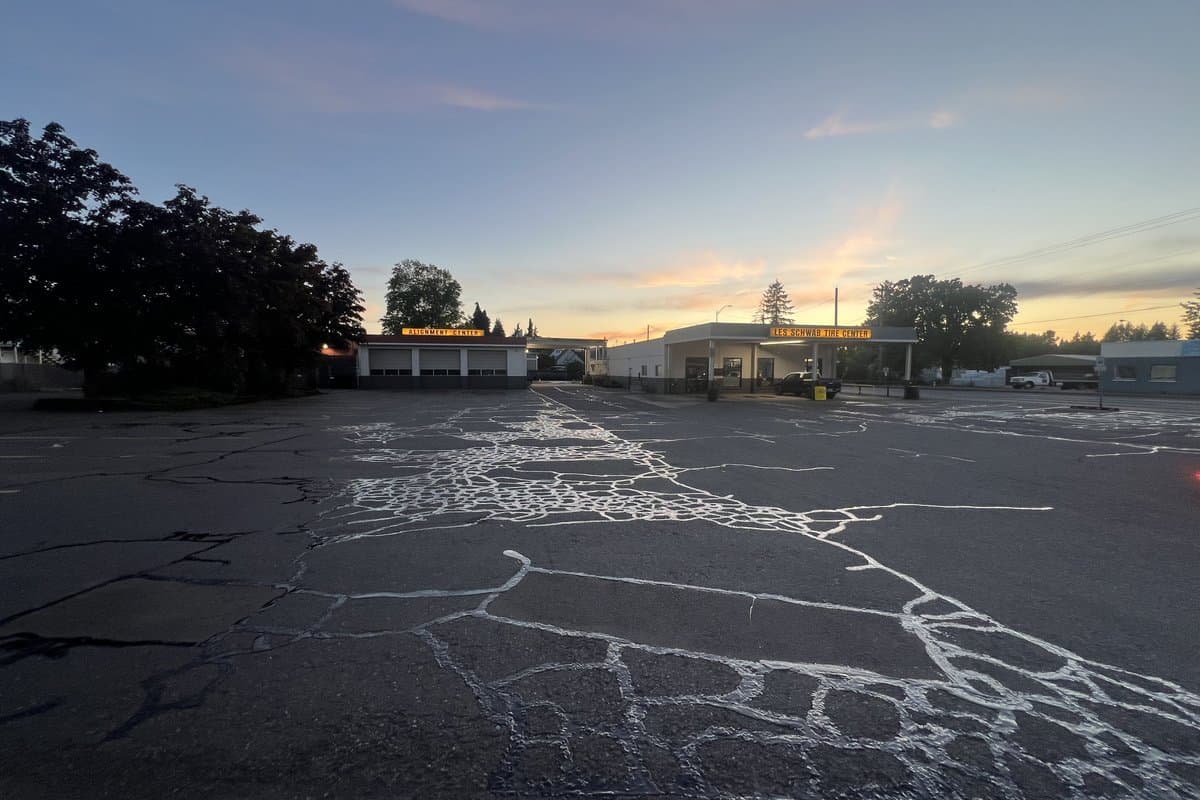
Crack Sealing & Repair in Timber, Oregon
Stop Small Cracks Before They Become Big Problems.
What is Crack Sealing?
Crack sealing is a preventive pavement maintenance technique that involves filling and sealing cracks in asphalt surfaces with specialized rubberized sealant. This asphalt crack repair method creates a flexible, waterproof barrier that moves with the pavement through temperature changes, preventing water infiltration and extending the life of your driveway, parking lot, or roadway.
Professional crack filling differs from DIY solutions in both materials and technique. We use hot-applied rubberized crack sealant that bonds to the crack walls and remains flexible year-round. The process includes cleaning debris from cracks, routing wider cracks for better adhesion, and applying sealant at the proper temperature for optimal penetration and bonding.
In Oregon's wet climate, crack sealing is one of the most cost-effective pavement maintenance investments you can make. Water is asphalt's greatest enemy, and even hairline cracks allow moisture to penetrate the base layers. By addressing cracks early with professional crack sealing services, you prevent the exponential damage that leads to potholes, alligator cracking, and complete pavement failure.
Why Crack Sealing Matters in Oregon
Understanding why this service matters helps you make informed decisions about your property.
- Water Damage Prevention: Oregon receives 40+ inches of rain annually in many areas. Unsealed cracks allow water to penetrate the asphalt base, causing erosion, undermining structural integrity, and accelerating deterioration. Crack sealing creates a waterproof barrier that protects your pavement's foundation.
- Freeze-Thaw Protection: When water enters cracks and freezes, it expands by up to 9%, widening cracks with each freeze-thaw cycle. Even in the Willamette Valley, winter temperatures regularly dip below freezing, making crack sealing essential for preventing this destructive cycle.
- Pothole Prevention: Potholes begin as small cracks that allow water infiltration. As the base erodes and freeze-thaw cycles widen the damage, sections of pavement collapse. Timely crack sealing stops this progression, preventing costly pothole repairs and liability concerns.
- Significant Cost Savings: Crack sealing costs a fraction of asphalt replacement. Industry studies show that every $1 spent on preventive crack sealing saves $6-8 in future repair costs. Maintaining your pavement with regular crack filling extends its lifespan by 5-10 years.
Signs Your Pavement Needs Crack Sealing
Recognizing these signs early can save you money and prevent more extensive damage to your property.
- Linear cracks running along the length of the pavement surface
- Transverse cracks running across the pavement width
- Alligator or fatigue cracking patterns indicating base failure beginning
- Cracks wider than 1/4 inch that allow visible water penetration
- Edge cracks along the perimeter of driveways or parking lots
- Block cracking forming rectangular patterns across the surface
Best Time for Crack Sealing in Oregon
The optimal crack sealing season in Oregon runs from late spring through early fall, typically April through October. Crack sealant requires pavement temperatures above 40°F and dry conditions for proper adhesion and curing. Spring is ideal because it addresses damage from winter freeze-thaw cycles before summer heat further expands cracks. Fall crack sealing prepares your pavement for winter by sealing entry points before the rainy season. We monitor weather conditions closely and schedule crack sealing during optimal temperature windows, typically on days when temperatures remain between 50-80°F for best results.
How We Complete Your Project
- 1. Assessment — Evaluate crack types, widths, and overall pavement condition
- 2. Crack Routing — Create uniform reservoirs for optimal sealant adhesion when needed
- 3. Cleaning — Remove all debris and vegetation with compressed air and wire brushing
- 4. Hot-Pour Application — Apply rubberized sealant at optimal temperature for maximum bond
- 5. Finishing — Level and smooth for safe, attractive finished surface
Benefits of Professional Crack Sealing & Repair
- Prevents Water Damage — Stops water infiltration that causes freeze-thaw damage and base erosion
- Extends Pavement Life — Early crack repair can extend your asphalt life by years
- Cost-Effective Prevention — Crack sealing costs a fraction of pothole repair or resurfacing
- Flexible Seal — Hot-pour rubberized material expands and contracts with temperature changes
- Professional Equipment — Commercial-grade heated applicators ensure proper material temperature
- Year-Round Durability — Engineered to withstand Oregon's variable climate conditions
After Crack Sealing Care
- 1. Allow 24-48 hours for the sealant to fully cure before heavy traffic
- 2. Avoid turning wheels sharply on freshly sealed cracks during the first week
- 3. Inspect sealed cracks annually and address any new cracks promptly
- 4. Keep the surface clean of debris that can hide developing cracks
- 5. Schedule follow-up crack sealing every 2-3 years as new cracks develop
Frequently Asked Questions
What size cracks can be sealed?
We can effectively seal cracks from 1/4" to about 1" wide. Cracks smaller than 1/4" are typically addressed during seal coating. Cracks wider than 1" usually require patching with hot asphalt rather than crack sealing alone.
How long does crack sealing last?
Quality hot-pour crack sealing typically lasts 3-5 years in Oregon's climate. Longevity depends on traffic volume, sun exposure, and how well the cracks were prepared before sealing. We use only premium rubberized materials for maximum durability.
Can you seal cracks in cold weather?
Hot-pour crack sealing can be performed in temperatures as low as 40°F since the material is heated to 375-400°F during application. However, the pavement surface should be dry. We avoid sealing during rain or when rain is forecast within 24 hours.
Why is hot-pour better than cold-pour crack filler?
Hot-pour rubberized crack filler provides superior adhesion and flexibility compared to cold-pour products. It bonds better to crack walls, remains flexible through temperature extremes, and lasts significantly longer. Cold-pour products from hardware stores are suitable for very minor DIY repairs but don't match professional results.
Should I seal cracks before or after seal coating?
Cracks should always be sealed BEFORE seal coating. This ensures proper adhesion of the crack filler to bare asphalt and provides a smooth surface for the sealer. When we do both services, crack sealing is included in our seal coating process.
What causes cracks in asphalt?
Asphalt cracks develop from several causes: thermal expansion/contraction (temperature changes), oxidation from UV exposure, heavy traffic loads, poor initial installation, inadequate base preparation, and tree root pressure. Oregon's combination of wet winters and dry summers accelerates many of these factors.
Service Area
We serve Timber and the surrounding Oregon area, including ZIP codes: 97144. Our coverage extends along the I-5 corridor from Eugene to Salem, reaching communities throughout Linn, Benton, Lane, Marion, and Polk counties. View all service areas
Also serving: Murphy, Detroit, Beaverton, Grass Valley, Stanfield, Mount Hood Parkdale, Scotts Mills, Phoenix, Warm Springs, Winchester, Mapleton, Damascus
Other services in Timber: Seal Coating, Asphalt Paving, Parking Lot Maintenance, Line Striping & Pavement Markings, Concrete Driveways, Sidewalks & Pathways
Ready to Get Started?
Contact us for a free estimate on crack sealing & repair in Timber.